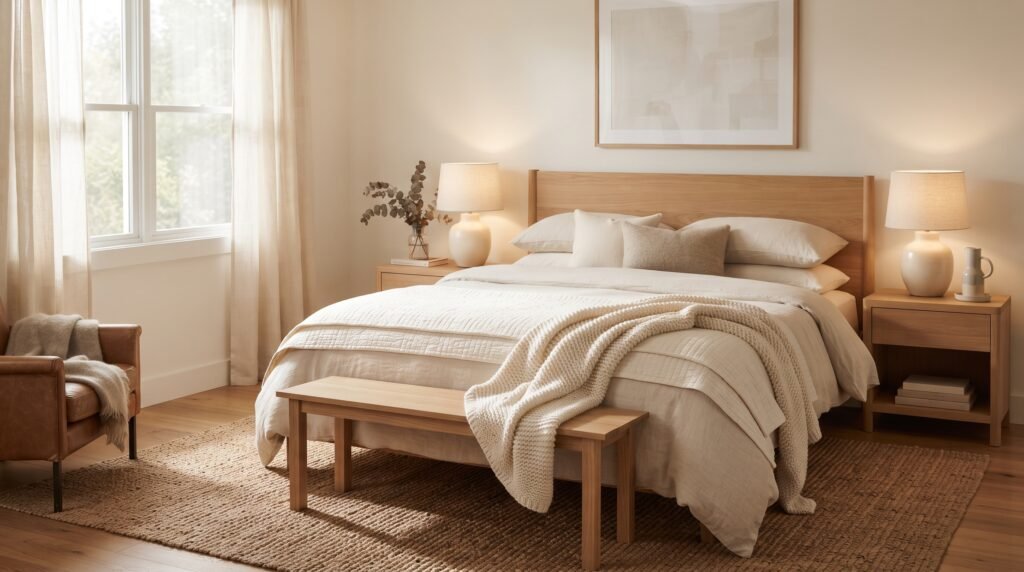
A cozy bedroom is rarely the result of one big purchase. It comes from a handful of small decisions that make a room feel soft, warm, and calm the moment you walk in: the way the bed is dressed, the color of the light bulbs, the texture underfoot, and the amount of clutter within sight of your pillow.
If you have been searching for cozy bedroom ideas that are realistic for a rented apartment or a family home, this guide is written for you. Every idea below can be done in stages, on almost any budget, and without a renovation. Some take ten minutes. Others are weekend projects. All of them aim at the same goal: a bedroom that feels comfortable to rest in and easy to keep that way.
The short version: the ten ideas are layered bedding, warm lighting, a soft neutral palette, mixed textures, thoughtful bedside styling, fuller window treatments, smart small-space choices, calm organization, natural touches, and a small reading corner. You do not need all ten. Choosing three or four that fit your room will change how it feels.
1. Build a Layered Bed You Actually Want to Sleep In
The bed is the largest surface in the room, so it sets the mood. Layered bedding is the fastest way to make a bedroom look and feel more inviting, and it works with nearly any style.
Start with good sheets in a fabric you enjoy touching. Cotton percale feels crisp and cool, sateen feels smoother and slightly heavier, flannel feels warm in cold months, and linen has a relaxed, slightly rumpled look that softens over time. Pick the one that matches how you sleep, not just how it looks in a photo.
Add a duvet or comforter, then a quilt or lightweight blanket folded across the lower third of the bed. Finish with a throw at the foot, draped loosely rather than folded into a perfect rectangle. A relaxed drape looks lived-in and warm.
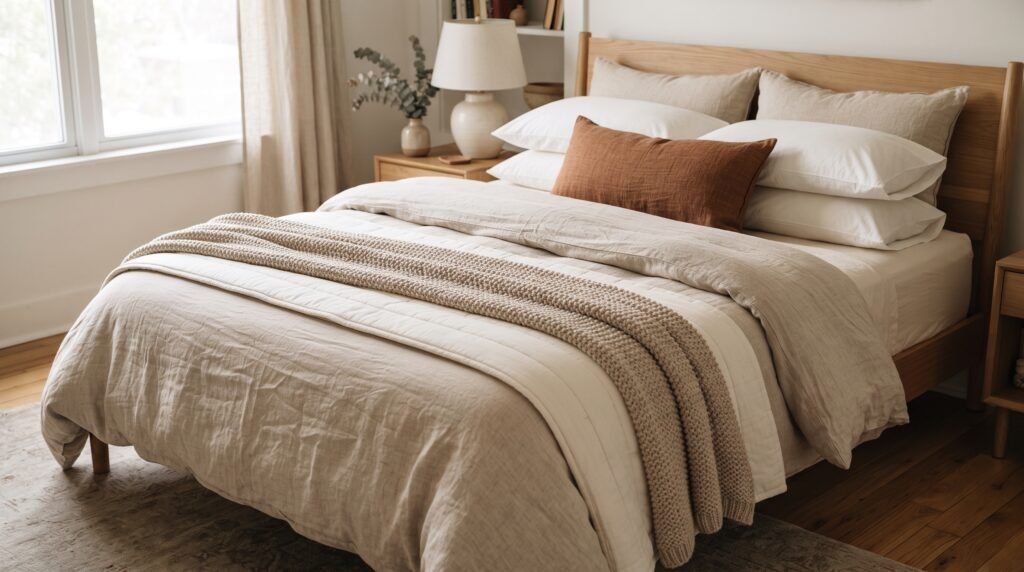
Seasonal swaps keep the bed comfortable all year. In summer, lean on a lighter quilt and breathable cotton or linen. In winter, add a heavier duvet or a wool blanket. Keeping two or three bedding sets means you can refresh the look without buying anything new.
For pillows, use two sleeping pillows, two standard shams, and one or two decorative cushions. More than that can turn bedtime into a chore of removing pillows. A good rule: if you would not want to move it every night, it does not belong on the bed.
2. Switch to Warm, Soft Lighting
Lighting changes a bedroom more than most people expect. A single bright overhead fixture makes even a beautifully styled room feel like an office. Cozy rooms use several low sources at different heights instead.
Aim for three layers. Use a bedside lamp on each side of the bed for reading light, a floor lamp or wall sconce in a corner to soften shadows, and, if you like, a small accent light on a dresser or shelf. Choose bulbs labeled warm white, usually around 2700K, which gives off a gentle yellow glow rather than a cold blue-white one.
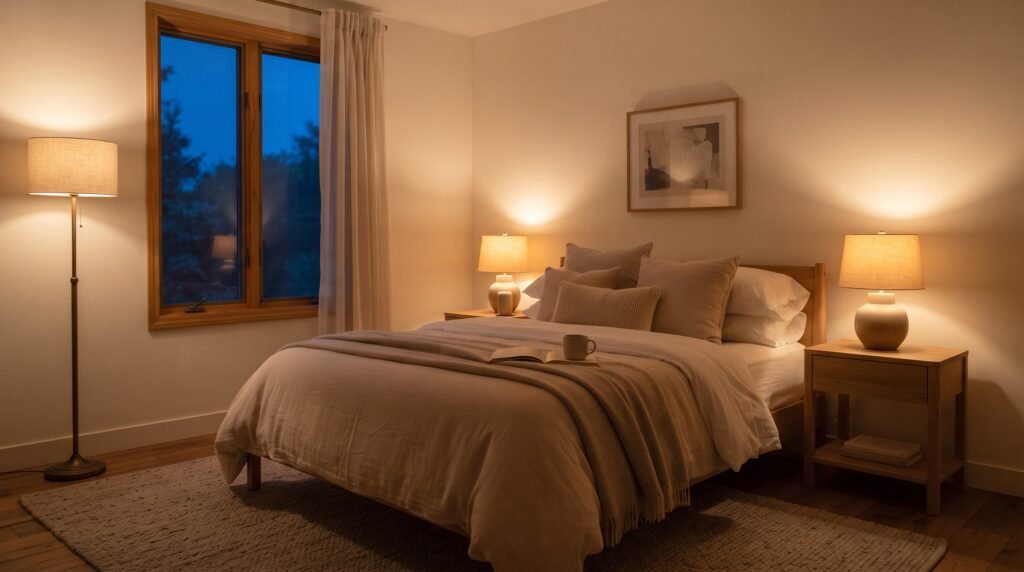
If you can add a dimmer or smart bulbs, do. Being able to lower the light in the evening helps the room shift from daytime to bedtime without any effort. Renters can use plug-in wall sconces with cord covers, or lamps with fabric shades, which spread light more softly than bare glass or metal.
Avoid placing bright, uncovered bulbs where you can see them from the bed. Shades, diffusers, and lampshades in linen or cream fabric are simple fixes.
3. Choose a Warm, Calming Color Palette
Color sets the emotional tone of a bedroom. If you want a calming bedroom, lean toward warm neutrals: cream, ivory, soft beige, oatmeal, warm greige, and muted clay. These shades reflect light gently and pair easily with wood and natural fibers.
You do not have to repaint to get the effect. Bedding, curtains, a rug, and a headboard together cover a large share of the visual field. If your walls are white or off-white, building the palette around textiles may be all you need.
If you do paint, test samples on two different walls and look at them in the morning and the evening. A color that seems soft at noon can turn gray or yellow under lamplight. Warm whites, soft mushroom tones, and pale sage often work well because they stay gentle in changing light.
Add depth with one or two quieter accent colors, such as dusty terracotta, olive, or deep brown, rather than many bright ones. Repeating the same colors in at least three places, such as a pillow, a vase, and a framed print, makes a palette look intentional.
If you love color, you can still keep the room restful. Choose softened versions, such as sage instead of bright green or dusty blue instead of navy, and use them in bedding or art so they can be changed easily later.
4. Mix Cozy Textures Instead of Adding More Stuff
A room full of smooth surfaces feels cool and flat, even when the colors are warm. Texture is what makes a space look comfortable. When you want a room to feel richer without adding clutter, change the materials before you add objects.
Try combining a chunky knit throw, a linen duvet cover, a velvet or bouclé cushion, a woven basket, and a wood nightstand. These different surfaces catch light differently, which gives the room depth even in a single color family.
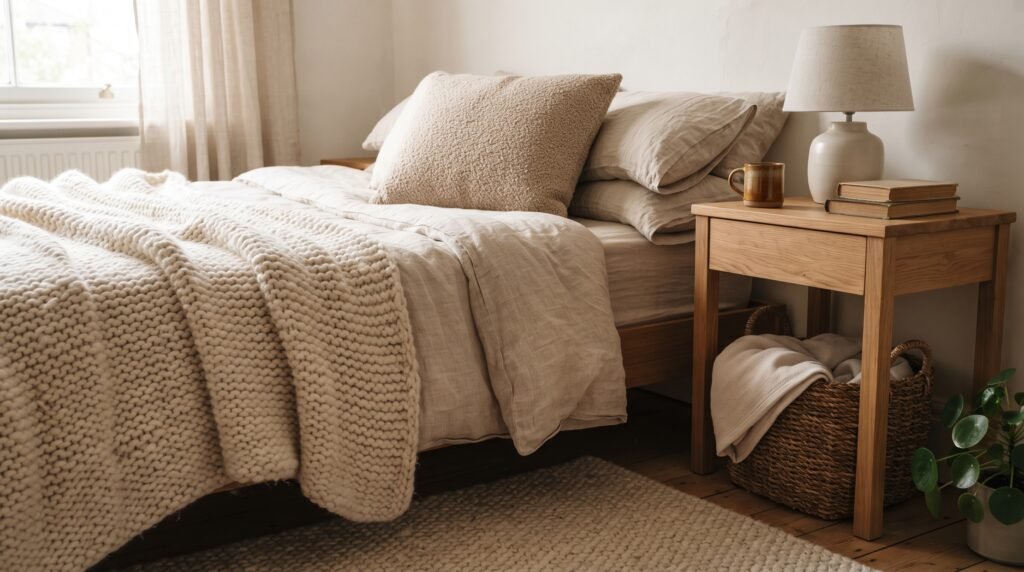
A rug is one of the most effective texture upgrades. Stepping onto something soft in the morning is a small pleasure that makes the whole room feel kinder. Place it so at least the bottom third of the bed sits on it, with the rug extending past both sides, or use two runners along each side of the bed in a narrower room.
Keep a balance. Too many textures at once can look busy. A useful guide is to choose two or three that you repeat, such as knit, linen, and wood, instead of one of everything.
5. Style the Bedside Table With Purpose
Your nightstand is the part of the room you see and touch most, so it deserves attention. A cozy bedside setup is both pretty and practical.
Start with a lamp, then add the things you actually use: a book, a glass of water, a small tray for hand cream or a watch, and a charging cable tucked out of sight. Add one decorative item, such as a small plant, a candle in a glass jar, or a framed photo, and stop there.
Trays and small dishes help in a big way. They give loose items a boundary, which makes the surface look tidy even when it is in use. If your nightstand has a drawer, keep the daily clutter in there, such as earplugs, lip balm, and notebooks, so the top stays calm.
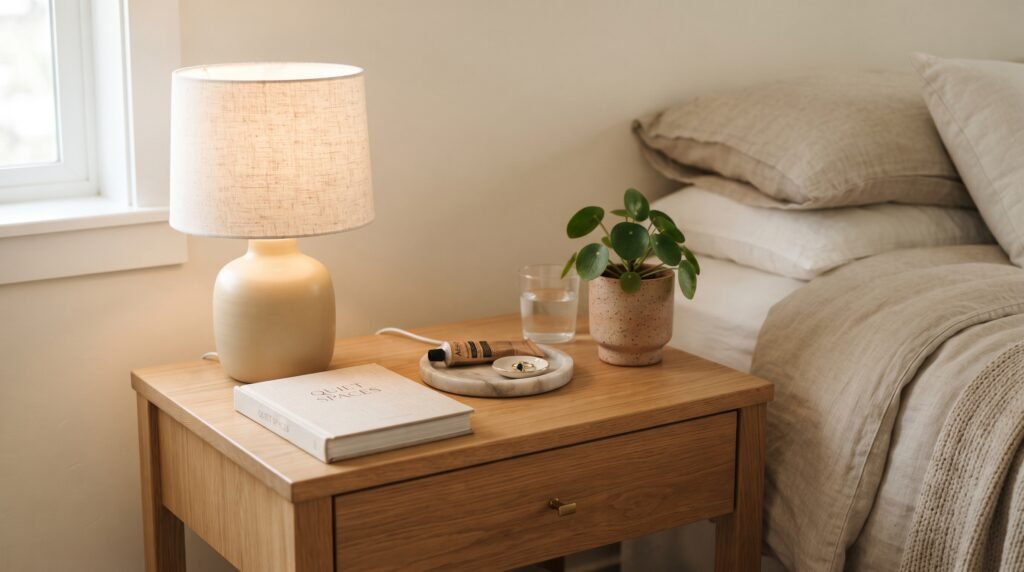
If your bedside space is very limited, a wall-mounted shelf or a narrow stool can work as a table. Matching nightstands look classic, but mismatched pieces in the same wood tone or color family feel more collected and personal.
6. Dress the Windows for Softness and Privacy
Windows can make a bedroom feel either exposed or sheltered. Soft, full window treatments add warmth and help with light control, which also supports better rest.
Choose curtains in a fabric with some weight, such as linen blend, cotton, or velvet. Lined curtains block more morning light and add a layer of insulation. Hang the rod higher than the window frame, close to the ceiling, and let the panels fall to the floor. This makes the ceiling feel taller and the window look larger.
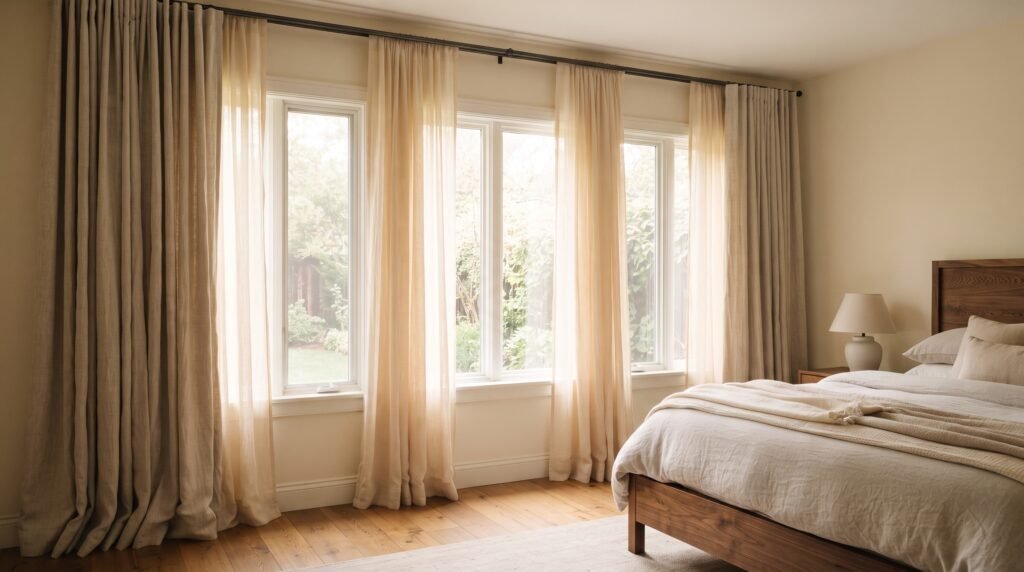
Fullness matters. Curtains that are barely wider than the window look flat and cheap. Aim for panels roughly two times the width of the window so they have gentle folds when closed.
Many people like to combine sheer curtains for daytime softness with heavier panels or blackout liners for sleep. If you rent, tension rods and removable hooks can work for lightweight curtains, while heavier panels often need proper brackets screwed into studs. Check your lease before drilling.
Whatever you choose, wash or steam new curtains before hanging them. Fabric that has been folded in a package often carries creases that make the whole window look unfinished, and a quick steaming gives the panels a softer fall.
7. Make a Small Cozy Bedroom Feel Intentional
A small cozy bedroom does not need to feel cramped. In fact, small rooms are often easier to make snug, because everything is within reach.
Begin by choosing furniture that fits the scale. A bed with a simple low profile, a slim nightstand, and a narrow dresser leave more visible floor, which makes the room feel larger. Wall-mounted lamps free up surface space, and a headboard that is the same color as the wall will blend in rather than dominate.
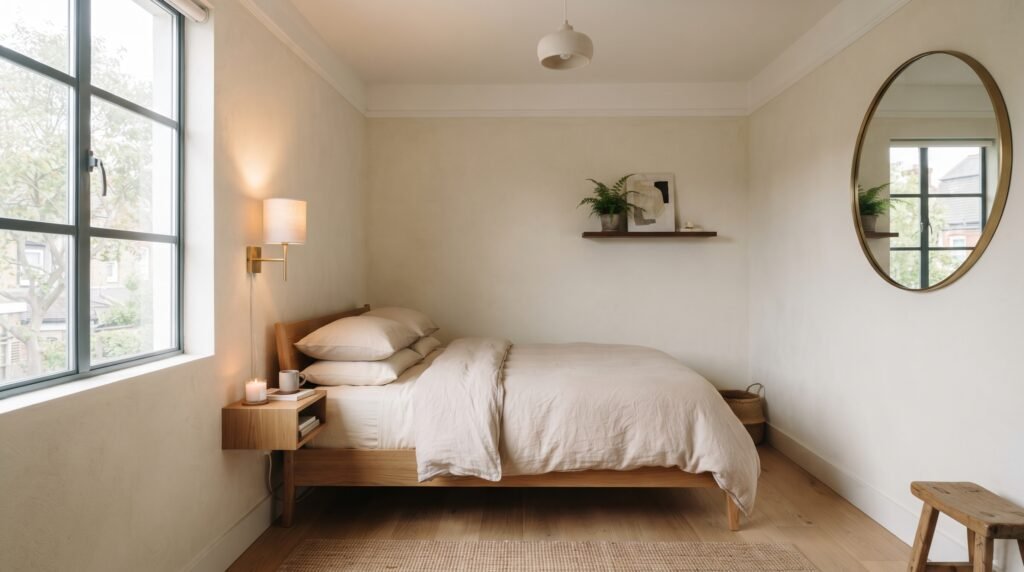
Use vertical space. Tall, narrow shelves, hooks behind the door, and under-bed storage containers keep belongings off the floor. Keep the area beneath the window clear when you can, so natural light moves across the room.
Mirrors can help, but placement matters. A mirror across from a window bounces daylight into the room, while one placed to reflect clutter will only double it. Keep the color palette tight in a small space. Fewer colors in similar tones make the room feel calmer and more open.
8. Keep the Room Calm With Simple Organization
You can add every soft throw in the world, but a bedroom with piles of laundry and crowded surfaces will not feel relaxing. A cozy bedroom depends partly on what you leave out.
Give every category of item a home. Closed storage, such as baskets with lids, a dresser, or boxes under the bed, keeps visual noise down. A laundry hamper you like looking at, such as a woven basket, makes it easier to put clothes away instead of onto a chair.
Be honest about what the room is for. If it doubles as an office, try to keep the desk area contained with a screen, a closed cabinet, or a small shelf unit you can close at night. Keeping work materials out of your direct line of sight from the bed helps the room feel like a place for rest.
A five-minute evening reset helps more than a monthly deep clean. Return clothes, clear the nightstand, fluff the pillows, and put the throw back on the bed. The room will be ready for the next day, and the next night.
9. Bring in Natural Elements and Gentle Scent
Natural materials add warmth in a way synthetic pieces often cannot. Wood, rattan, cotton, wool, ceramic, and stone give a room a grounded, comfortable feeling.
A wooden bench, a rattan headboard, or a simple wood nightstand brings warmth that works with almost any palette. Ceramic lamps and stoneware vases add weight and quiet interest. Dried stems, such as pampas grass or eucalyptus, give an organic look without any upkeep.
Plants can be lovely if the room gets enough light. If it does not, choose low-light options or faux plants with a realistic look, and keep them modest in size. One plant on a dresser or shelf is usually enough.
Scent is personal, so keep it subtle. A candle, a diffuser, or linen spray used lightly in the evening can make the room feel welcoming. Pay attention to how you feel, since strong fragrances bother some people, and never leave a candle burning unattended or while you sleep.
10. Create a Small Reading Corner
A single comfortable chair can change how you use the whole room. A reading corner gives you a place to sit that is not the bed, which keeps the bed associated with sleep and makes the room feel more complete.
You do not need much space. An upholstered armchair, a slipper chair, or even a cushioned bench works well. Add a small side table, a floor lamp with a warm bulb, and a basket for blankets and books. Place it near a window if you can, so you have natural light during the day.
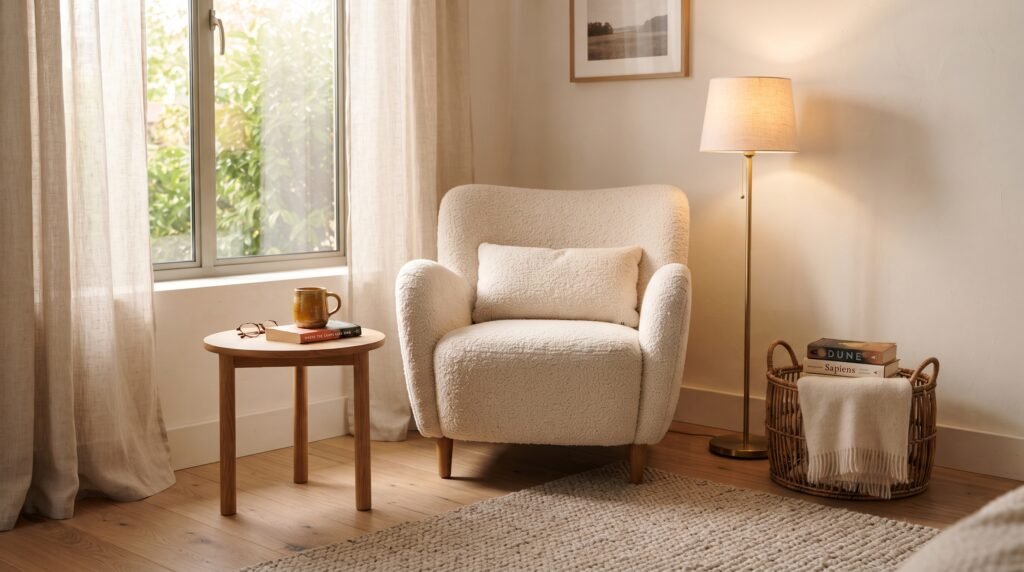
If floor space is tight, a corner is ideal. Even a generous floor cushion with a throw and a wall sconce above can offer a quiet spot to read or unwind with tea.
Keep the corner simple. A chair that is comfortable but not oversized, a layer of softness, and a lamp are enough. The goal is a place that invites you to slow down.
Quick Reference: Which Idea Gives the Most Impact?
| If you want… | Start with… |
|---|---|
| A fast, low-cost change | Layered bedding and warm bulbs |
| A softer, calmer look | A warm neutral palette and fuller curtains |
| More warmth underfoot | A larger rug and textured throws |
| A tidier feel | Closed storage and a nightly reset |
| A rental-friendly update | Plug-in sconces, tension rods, and textiles |
Where to Begin If You Feel Overwhelmed
Pick one change you can complete this week. For most people, that is the bed and the lighting. Replace cold bulbs with warm ones, add a throw and one extra layer of bedding, and clear your nightstand down to the essentials. These steps cost little and show results immediately.
Next, look at what you see from the bed. Your eyes land on the same few places every day. Whatever is there should look calm: soft curtains, a tidy dresser, a lamp, a piece of art you like.
After that, move on to bigger upgrades such as a rug, curtains, or a reading chair when your budget allows. Living with each change for a few weeks helps you notice what actually makes the room feel better and what is only decoration.
Final Thoughts on Creating a Cozy Bedroom
The best cozy bedroom ideas are the ones that fit the way you live. A room can follow every style rule and still feel cold if it is uncomfortable, cluttered, or lit harshly. On the other hand, a modest room with warm light, soft bedding, and a little order can feel like a retreat.
Start small, trust your own comfort, and add slowly. Keep what feels good to touch, look at, and sleep in, and let the rest go. Over time, those small choices add up to a bedroom that feels warm, relaxing, and truly yours.
7. FAQ
What makes a bedroom feel cozy?
Soft layered bedding, warm low lighting, gentle colors, varied textures, and low clutter. Warm light and soft textiles usually make the biggest difference.
How can I make my bedroom cozy on a budget?
Start with warm bulbs, a throw blanket, extra pillow layers, and a tidy nightstand. Thrifted baskets, trays, and lamps add warmth cheaply.
What colors make a bedroom feel relaxing?
Warm neutrals such as cream, beige, oatmeal, and soft greige, with muted accents like sage, dusty blue, or clay.
How do I make a small bedroom cozy without making it feel crowded?
Keep furniture low and slim, use wall-mounted lighting, store items vertically and under the bed, and limit the palette to a few related tones.
What are good cozy bedroom ideas for renters?
Textiles, rugs, plug-in sconces, lamps, tension rods, removable hooks, and framed art on leaning shelves, all of which avoid permanent changes.
How many pillows should be on a bed?
Two sleeping pillows, two shams, and one or two decorative cushions is a comfortable balance for most beds.
Leave a Comment
Be the first to comment